



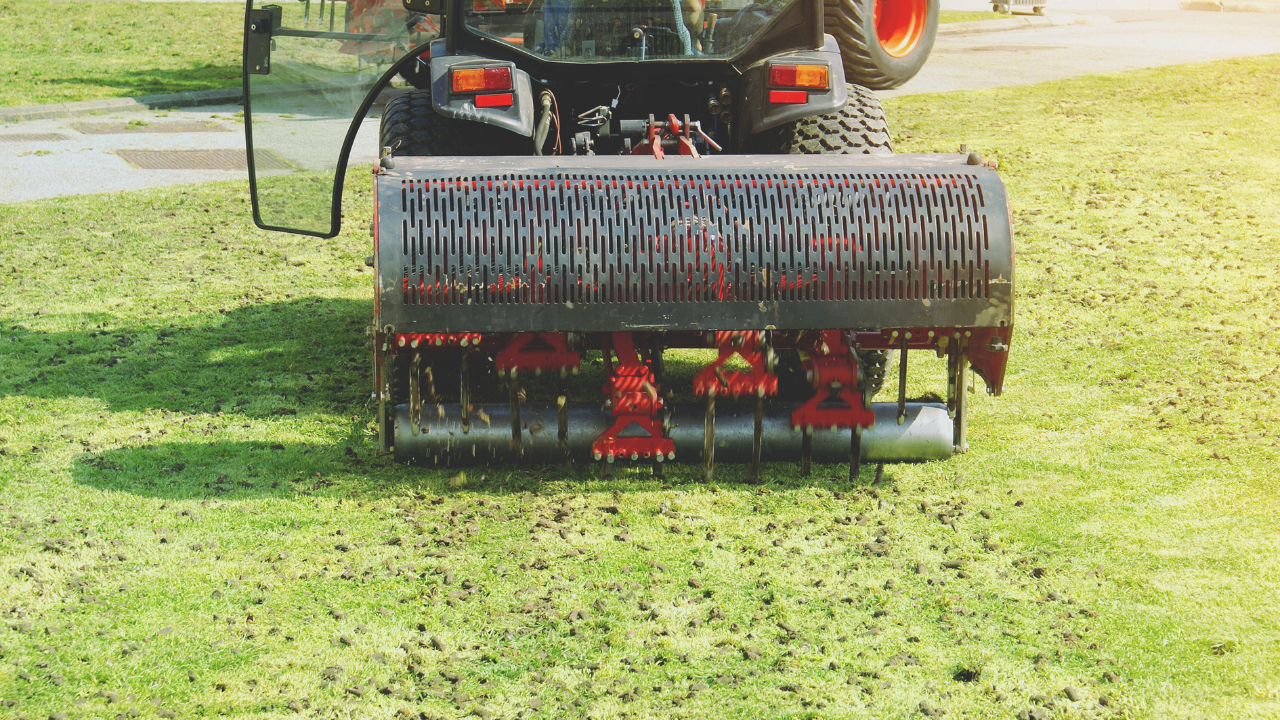
Mid September to mid October is the best time to aerate and overseed in Hampton Roads. Learn why fall beats spring for tall fescue lawns, how to aerate and overseed step by step, and the aftercare that helps new grass take root before winter.
For most Hampton Roads lawns, the best time to aerate and overseed is mid September to mid October. That window gives new tall fescue seed warm soil to sprout in, cooler air to grow in, and enough weeks before the first hard frost to root properly.
If you have been wondering when to aerate and overseed your lawn in Chesapeake, Norfolk or Virginia Beach, the short answer is that fall wins every time. Below we explain why, walk through the process step by step, and cover the aftercare that decides whether new seed actually takes.
Hampton Roads sits in the transition zone, so you will find both main grass types here. Tall fescue is a cool season grass. It is the lawn that stays green through winter, and it is the grass fall aeration and overseeding is built for.
Warm season grasses like Bermuda, zoysia, St. Augustine and centipede turn brown and go dormant in winter. Those lawns are aerated in late spring or early summer while they are actively growing, and they are not overseeded in fall the same way.
Not sure which you have? If your yard is still green in January, it is almost certainly fescue. If you would rather have someone look at it, our Chesapeake lawn care team can tell you on the first visit.

Spring feels like the natural time to work on a lawn, but in coastal Virginia it sets new grass up to struggle.
Seedlings get time before the heat. Fescue sown in spring has only a few weeks before summer arrives. Young roots are shallow, and many spring seedlings burn out by July.
Weeds compete less. Crabgrass and other summer weeds sprout in spring. Seed in fall and your new grass has the yard largely to itself.
Warm soil, cool air. In September and October the ground still holds summer heat, which speeds germination, while cooler days ease stress on young grass. Tall fescue usually sprouts within one to two weeks under these conditions.
Fall rain helps. Moisture is the biggest factor in germination, and fall weather does part of the watering for you.
It repairs summer damage. Heat, dry spells, foot traffic and disease thin fescue out by late August. Fall aeration and overseeding fills those gaps before winter.
There is a longer term reason too. Individual tall fescue plants only live a few years, and fescue does not spread much on its own. A lawn that never gets overseeded slowly thins out, no matter how well it is mowed.
The reason the window closes in mid October is frost. New seedlings need roughly six to eight weeks of growing time before a hard freeze, and seed that goes down too late often fails to establish.
1. Mow shorter than usual. Cut the lawn to around 2 to 2.5 inches and bag the clippings so seed can reach the soil.
2. Check soil moisture. A core aerator pulls the best plugs from slightly moist soil. If the ground is bone dry, water a day or two beforehand. Avoid aerating soggy ground.
3. Core aerate. Use a core aerator, which pulls out plugs of soil, rather than a spike aerator, which can compact the ground further. On heavily used areas, make a second pass in a different direction. Leave the plugs on the lawn. They break down on their own.
4. Spread the seed. Use a quality turf type tall fescue blend and follow the overseeding rate on the bag. Split the seed into two passes in opposite directions for even coverage, and go a little heavier on bare patches.
5. Feed the new grass. A starter fertilizer gives seedlings what they need to root. A soil test tells you whether your lawn also needs lime, and Virginia Cooperative Extension recommends testing at least once every three years.
6. Water right away. Give the lawn a light, even watering the same day so the seed settles into the aeration holes.

What you do after seeding matters as much as when you aerate and overseed.
Keep the top inch moist. Water lightly once or twice a day until the seedlings are up, then switch to deeper, less frequent watering.
Stay off it. Keep kids, pets and heavy foot traffic off the lawn while the new grass establishes.
Hold the first mow. Wait until the new grass reaches about 3.5 to 4 inches, then mow with a sharp blade and never cut below 3 inches.
Skip the weed killer. Young seedlings are far more sensitive to chemicals than mature grass, and many weed products also stop seed from sprouting. Wait until spring.
Keep the leaves off. In Hampton Roads, leaves start dropping right as new grass comes up. A heavy layer blocks light and smothers seedlings within days. Regular fall cleanup in Chesapeake protects that investment, and we offer the same fall cleanup service in Norfolk.
Fall aeration and overseeding is the single best thing you can do for a fescue lawn in Hampton Roads. Hit the mid September to mid October window, keep the seed moist, and keep leaves off it, and you will see a thicker, greener lawn by spring.
If you would rather leave the timing and equipment to someone else, Andrae's handles aeration and overseeding alongside weekly mowing. Homeowners already on our Norfolk lawn care schedule can add it in. Book your free estimate today and we will get your lawn on the calendar for next season's window.
When is the best time to aerate and overseed a lawn in Virginia?
For tall fescue lawns in Hampton Roads, mid September to mid October. The soil is still warm, the air is cooler, and new grass has enough time to root before frost.
Is it too late to aerate and overseed in late October?
In a mild year, seed sown in late October can still come up, but the risk rises the closer you get to frost. If you have missed the window, the safest choice is to plan for next September.
Can I aerate and overseed in spring instead?
You can, but results are usually weaker. Spring seedlings face weed competition and summer heat before their roots are established. Spring is better for patching small spots than for full overseeding.
How often should I aerate my lawn?
Fescue lawns benefit from core aeration every year. Lawns with lighter use can often go two to three years between aerations.
Do I have to aerate before overseeding?
It is not required, but it makes a big difference. Aeration creates holes where seed lands in direct contact with soil, which improves germination far more than spreading seed on top.
What do I do with the soil plugs after aeration?
Leave them. They break down within a couple of weeks, returning nutrients and soil to the lawn. Mowing over them speeds that up.
Let's create a landscape where you can relax, entertain, and make
memories. Reach out today to start bringing your vision to life.


Let's create a landscape where you can relax, entertain,
and make memories. Reach out today to start bringing
your vision to life.